
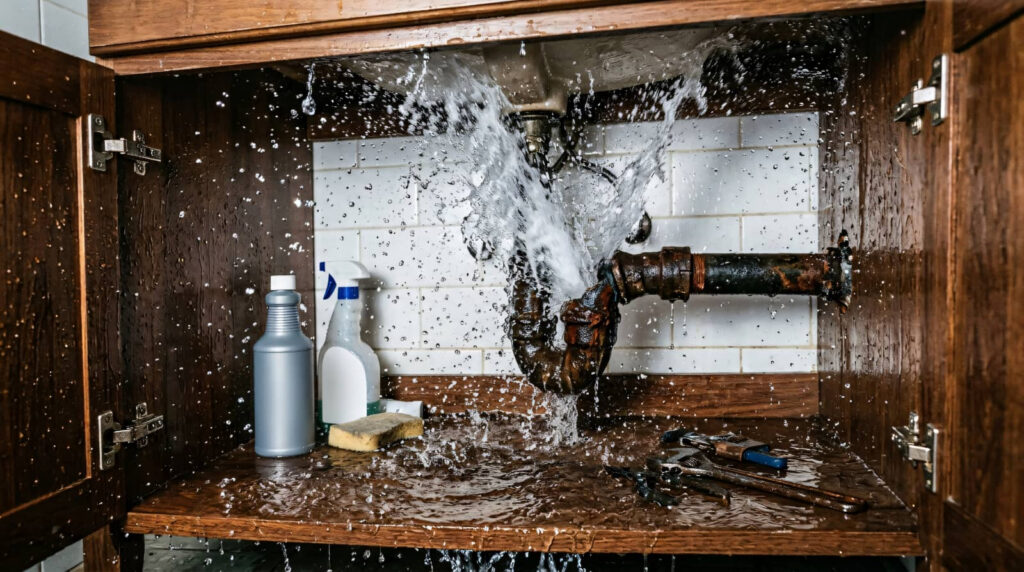
Burst Pipe Water Damage requires quick action to limit the damage. Shut off the water, cut power if needed, and document the damage before cleanup starts. Then extract standing water, remove soaked materials that can’t be saved, and dry the area with professional equipment to reduce mold risk. But cleanup is only the first phase, because the real challenge begins when you have to decide what needs to be rebuilt and what can be saved.
Key Takeaways
- Shut off water and power, move valuables, and document damage with photos for insurance and repair planning.
- Extract standing water quickly, remove damaged materials, and sanitize affected areas to prevent mold growth.
- Dry the structure with air movers and dehumidifiers, while monitoring moisture levels until readings are normal.
- Remove unsalvageable drywall, insulation, and debris, then inspect framing, subfloors, and underlayment for hidden damage.
- Rebuild in sequence, verify plumbing, electrical, gas, and HVAC systems, and restore finishes with regular progress updates.
What to Do After a Burst Pipe?
After a burst pipe, you need to act fast: shut off the main water supply, cut power to affected areas if there’s any chance water reached outlets or wiring, and move valuables out of the wet zone.
Next, document the damage with photos for your burst pipe water damage repair claim, then call a licensed plumber and a water restoration team. You’ll want a quick inspection to identify the leak source, hidden moisture, and unsafe materials.
If you belong to a property management team or neighborhood response network, alert them now so they can coordinate access and support. Keep people and pets out of saturated rooms, open windows if it’s safe, and place towels or buckets only as a temporary control.
Acting in sequence helps you protect your home, reduce losses, and get back to normal faster.
How Burst Pipe Cleanup Works
You’ll start with water extraction, using pumps and vacuums to remove standing water fast.
Next, you’ll run drying and dehumidification equipment to pull moisture from walls, floors, and air.
Then you’ll remove any damaged materials that can’t be restored so you can prepare the area for repairs.
Water Extraction Process
Once the damaged line is shut off, technicians begin water extraction right away to stop further spread and limit structural damage.
You’ll see them map the affected area, check standing water depth, and choose the right pumps or truck-mounted vacuums. They work from the perimeter inward, removing visible water first, then pulling moisture from carpets, pads, and hard surfaces.
If you’re part of a multi-unit building, they’ll coordinate access so your space stays secure and the response stays organized. Technicians also lift baseboards or move light contents as needed to clear trapped water paths.
Each pass gets measured, so you know the extraction is thorough. This step helps you regain control quickly and sets up the rest of the recovery plan.
Drying And Dehumidification
Next, technicians shift from removal to moisture control by setting up drying and dehumidification equipment. You’ll see air movers placed to push airflow across wet surfaces, while dehumidifiers pull moisture from the air and lower indoor humidity.
Technicians map wet zones, then adjust airflow, temperature, and equipment placement to speed evaporation without spreading dampness. They check wall cavities, subfloors, and hidden spaces with moisture meters, so you know the dry-down is working.
During each visit, they record readings, compare them to baseline levels, and fine-tune the setup. This step helps stabilize your home, reduce lingering odors, and prevent secondary issues.
You’re part of a clear recovery plan, and the goal is simple: get your space back to dry, safe conditions fast.
Damaged Material Removal
With drying underway, technicians inspect which materials can’t be saved and remove them in a controlled way. You stay informed while they isolate damaged drywall, insulation, baseboards, and flooring, then cut back to clean edges. This protects adjoining rooms and keeps your project moving.
They map wet zones with moisture meters.
They mark salvageable surfaces and containment lines.
They bag debris and control dust.
They haul out contaminated materials for disposal.
After removal, they recheck framing and subfloors for hidden damage. If they find mold risk or swelling, they document it and adjust the plan.
You get a safer space, clearer scope, and a team that works with you from cleanup to rebuild.
When Wet Walls and Floors Must Be Removed
When water soaks into drywall, insulation, subflooring, or warped flooring, restoration crews often have to remove those materials to stop hidden damage from spreading.
You’ll usually see them map the affected area, cut back to clean edges, and lift materials in sections so the framing stays intact. Next, they check for swelling, delamination, and softened joists or studs that can’t safely hold repairs.
If wall cavities or floor layers stayed saturated, keeping them in place can trap moisture and weaken the structure. You’re not facing this alone; your crew follows a clear, disciplined process to protect your home.
After removal, they document what was taken out, separate salvageable parts, and prepare the space for the next repair step with less risk and more control.
How Drying Helps Prevent Mold
You need to remove moisture fast after a burst pipe, because standing water raises the risk of mold growth.
Start drying with air movers, dehumidifiers, and open pathways so wet materials release trapped moisture quickly.
When you control the drying process early, you help stop mold from forming in walls, floors, and hidden cavities.
Moisture Removal Speed
Fast moisture removal is critical after a burst pipe because standing water can let mold start growing in as little as 24 to 48 hours. You need to move quickly, and you’re not alone in that process.
Follow these steps:
- Shut off water and power to the affected area.
- Extract pooled water with pumps or vacuums.
- Run air movers and dehumidifiers to pull moisture from floors, walls, and framing.
- Check readings daily so drying stays on track.
When you dry materials fast, you limit damage, shorten recovery time, and protect your home’s structure.
Your goal is steady evaporation, not surface-only drying. Keep equipment running until moisture levels drop to target range, then you can move confidently into repairs and reconstruction with your crew.
Mold Growth Prevention
Drying doesn’t just remove visible water; it cuts off the damp conditions mold needs to spread after a burst pipe. You start by extracting standing water, then place air movers and dehumidifiers to lower humidity fast.
Next, you monitor moisture in drywall, framing, and flooring with meters, because mold can grow when materials stay wet. You also remove saturated insulation and porous materials that can’t dry safely.
Keep indoor air moving and maintain target dryness until readings return to normal. If you stay proactive, you protect your home’s structure and your community’s health.
Finally, inspect hidden cavities and baseboards, then clean and sanitize affected surfaces. That step helps you re-enter the space with confidence, knowing you’ve reduced the chance of mold returning.
What Burst Pipe Water Damage Repair Includes
When a pipe bursts, repair crews first extract standing water, then dry the affected areas with specialized equipment to limit further damage. You’ll usually see a clear, step-by-step process that keeps your space safe and your team informed:
- Inspect the damage and map wet zones.
- Remove water with pumps and vacuums.
- Dry walls, floors, and cavities with air movers and dehumidifiers.
- Remove unsalvageable materials and sanitize surfaces.
Technicians monitor moisture levels until readings drop to normal, so you know the job’s progressing.
They also document losses for your insurer and isolate contaminated areas when needed. This approach helps you regain control faster and keeps your property on the right track after the emergency.
What Rebuilding After Water Damage Looks Like
Once demolition is complete and moisture readings are stable, rebuilding can begin with a clear scope of work.
You’ll review the damage map, confirm materials, and choose replacements that match your existing structure. Your team then installs framing, insulation, drywall, and vapor barriers in sequence, checking alignment and fastening points at each step.
Next, they tape, mud, sand, prime, and paint to restore clean finishes. If flooring was removed, they replace underlayment and set new surfaces after subfloor testing.
Cabinets, trim, and fixtures go back only after utilities are verified safe. Throughout, you’ll get updates, photos, and milestone checks, so you know exactly where things stand.
The goal is simple: rebuild your space correctly and help you feel at home again.
Frequently Asked Questions
How Quickly Should Insurance Be Notified After a Burst Pipe?
You should notify your insurer immediately, ideally within 24 hours. Call, document damage, submit photos, and follow claim steps fast so you protect coverage, speed approval, and keep your recovery moving.
Can Burst Pipe Damage Affect Electrical Systems?
Yes, burst pipe damage can affect your electrical systems. You should shut off power, inspect outlets, panels, and wiring, call a licensed electrician, and dry affected areas before restoring service to keep your home safe.
How Long Does Professional Water Extraction Usually Take?
Professional water extraction usually takes 1–4 hours, depending on flood depth and room size. You’ll see technicians inspect, pump out water, remove standing moisture, and verify dry surfaces before they move to drying equipment.
Is It Safe to Stay in the Home During Drying?
Usually, yes—if you can safely stay. You’ll need strong ventilation, dehumidifiers, and dry pathways. Keep clear of wet wiring, monitor humidity, and follow technicians’ checks. If mold, contamination, or structural damage appears, leave immediately.
What Signs Mean Hidden Water Damage Remains?
You’ll notice hidden damage if you smell musty odors, see peeling paint, warped floors, soft drywall, or recurring stains. Check moisture readings, remove baseboards, and inspect behind walls so you catch trapped water early.
Wrap-Up
When a pipe bursts, you need to act fast: shut off the water, cut power if needed, document the damage, and start cleanup right away. One key statistic: mold can begin growing within 24 to 48 hours, so drying can’t wait. After extraction, remove unsalvageable materials, verify the structure is dry, and rebuild with new underlayment, framing, insulation, and finishes. If you follow each step, you’ll restore safety and stop further damage.